
8 Bold Predictions for the Future of Steel Construction in Australia
Home » 8 Bold Predictions for the Future of Steel Construction in Australia
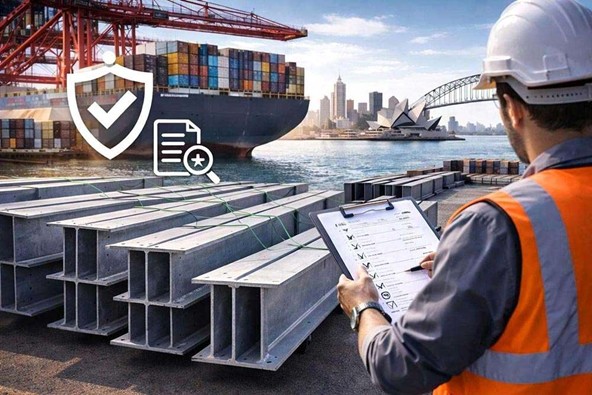
The structural steel industry in Australia is standing at the edge of a significant transformation. Infrastructure investment is surging, sustainability mandates are tightening, and the technologies reshaping fabrication and installation are advancing faster than many in the industry anticipated. At SteelRise Australia, we work at the front line of steel fabrication and erection across the country, and what we are seeing on projects and in the pipeline tells a clear story. The next decade is going to fundamentally change how structural steel is designed, manufactured, and built in this country. Here are eight bold predictions for where the industry is heading, grounded in current data, policy shifts, and the direction the market is already moving.
Table of Contents
ToggleKey Takeaways
- Australia’s $242 billion infrastructure pipeline will sustain elevated steel demand well into the 2030s.
- Green steel production is moving from pilot scale to commercial reality, with local facilities expected from 2027 onward.
- Prefabrication and modular construction are becoming the dominant delivery method for structural steel projects.
- BIM, digital twins, and automation are shifting from optional tools to baseline expectations on major projects.
- The housing crisis, renewable energy rollout, and embodied carbon policy are three powerful forces all pulling in the same direction for steel.
Why Now Is the Time to Think About What Comes Next
Australia’s construction market reached an estimated AUD 193 billion in 2025 and is forecast to grow at a compound annual rate of around 5.6 per cent through to 2029, reaching approximately AUD 256 billion. Structural steel sits right at the centre of that growth. Transport infrastructure, commercial buildings, renewable energy facilities, and housing all depend on fabricated steel, and the decisions being made right now about how that steel is produced, sourced, and installed will shape the industry for a generation.
What follows is not speculation for its own sake. Each prediction is grounded in current government policy, verified market data, and trends already visible in active projects. Whether you are a builder, developer, project manager, or structural engineer, understanding where the industry is heading gives you a significant planning advantage over those who are not paying attention.
Prediction 1: Green Steel Will Move from Pilot to Mainstream
For years, green steel has been discussed as a future possibility. That future is arriving faster than most expected. Three major green steel projects are now underway in Western Australia, with initial production facilities expected to begin operations from 2027 onward. The Australian Government has committed $18.1 million in Green Metals Foundational Incentives, and green procurement policies already require embodied carbon reporting on large government-funded construction contracts.
The cost premium for green steel, which currently ranges from around 10 per cent to higher depending on the production method, is expected to narrow significantly as renewable energy costs fall and hydrogen production scales. As noted by Austrade International, Australia holds a structural advantage as a green steel producer given its iron ore reserves and renewable energy potential. By the late 2020s, specifying green steel on commercial and infrastructure projects will be a baseline expectation, not a premium choice.
For fabricators and builders, this means understanding embodied carbon, establishing supplier relationships with certified green steel producers, and positioning early for government contracts that increasingly favour low-emissions materials.
Prediction 2: Prefabrication Will Become the Standard, Not the Exception
The case for prefabricated structural steel has been compelling for years. The reason it is about to become the standard is that the pressures forcing the shift are now too strong to ignore. Labour shortages in the Australian construction sector are projected to reach 300,000 workers by 2027, according to Infrastructure Australia. At the same time, project timelines are tightening, costs are escalating, and clients are demanding more predictable delivery.
Prefabrication directly addresses all three pressures. Steel components fabricated in a controlled factory environment require fewer on-site labour hours, reduce waste, and arrive ready for installation. Australia’s building regulators are actively updating guidance under the National Construction Code to support greater prefabrication and modular adoption, as reported by The Conversation. The global steel framing market is projected to reach $163 billion by 2030, growing at 4.1 per cent annually, driven in significant part by the prefabrication trend.
For steel fabricators, this means investing in off-site manufacturing capability, aligning with BIM-driven design workflows, and building logistics capacity to manage the delivery and sequencing of prefabricated components to active construction sites.
Prediction 3: BIM Will Transition from Best Practice to Mandatory Requirement
Building Information Modelling has been encouraged on major Australian projects for years. Within the next decade, it will be a contractual requirement on virtually all government-funded structural steel work, and increasingly on private commercial projects too.
Infrastructure Australia’s 2025 Infrastructure Market Capacity Report identifies demand growth for 3D modelling and BIM skills as one of the top workforce requirements in the sector. Leading firms are already recruiting for these capabilities ahead of the curve. For structural steel, the integration of BIM with shop drawing generation, fabrication scheduling, and installation sequencing creates a seamless workflow that reduces rework, minimises clashes, and accelerates delivery. At SteelRise Australia, 3D modelling and shop drawings aligned to structural engineers’ details are already a core part of our service offering, recognising that this is where the industry is heading.
Fabricators and contractors who are not yet investing in BIM capability risk being locked out of major projects as procurement requirements evolve.
Prediction 4: Robotics and Automation Will Reach Active Construction Sites
Robotics in construction is not a far-off concept. It is already operating in steel fabrication facilities, where automated cutting, welding, and surface treatment systems are improving both quality and throughput. The next five years will see this shift extend to the construction site itself.
Infrastructure Australia projects a 15 per cent reduction in tasks performed solely by humans by 2030, with 82 per cent of that shift driven by automation. For structural steel erection, this translates to automated bolt-tightening tools, robotic welding units for field connections, drone-based inspection of erected steelwork, and AI-assisted quality assurance systems that can compare as-built conditions to BIM models in real time.
This does not mean site workforces shrink dramatically. The same research confirms that building construction workers will see some of the strongest absolute job growth over the next five years. What changes is the skill profile. Workers who can operate and supervise automated systems, interpret BIM outputs, and manage digitally assisted safety processes will be in high demand. Those without these capabilities will face growing pressure.
Prediction 5: Net Zero Fabrication Will Become a Competitive Advantage
Embodied carbon, meaning the carbon emitted during the manufacture of building materials, is moving to the centre of construction procurement in Australia. New South Wales was the first state to require developers to measure and report embodied carbon on major projects, a move widely expected to be replicated nationally as targets tighten toward 2030 and 2050 net zero commitments.
For steel fabricators, this creates a genuine competitive advantage for those who invest in low-carbon production processes, renewable energy-powered facilities, and verified environmental product declarations. The Australian steel market, valued at USD 20.1 billion in 2025 and projected to reach USD 26.2 billion by 2034 according to the IMARC Group, will increasingly direct contracts toward suppliers who can demonstrate lower emissions intensity. As outlined by the Australian Centre for Corporate Responsibility’s green steel analysis: by 2030, 71 per cent of the world’s steelmaking assets will have reached the end of their operating lives. The capital reallocation decisions made in the next few years will determine whether those assets are replaced with clean technology or locked into another generation of carbon-intensive production.
Fabricators who move early on decarbonisation will be better positioned for government contracts, export markets, and clients with net zero commitments in their supply chains.
Prediction 6: The Housing Crisis Will Drive a New Cycle of Steel Demand
Australia’s housing shortage is one of the most pressing domestic policy challenges of this decade. The federal government has committed to building 1.2 million homes by 2030, an extraordinarily ambitious target that will require construction at a pace and scale the industry has not previously delivered. Steel is central to meeting that challenge.
Modular and prefabricated housing built around structural steel frames can be delivered faster, at better quality, and with more consistent outcomes than traditional on-site construction. Steel-framed residential construction is already well established in Australia, and the combination of government housing targets, planning reforms, and the maturity of off-site manufacturing means a significant volume uplift is coming for fabricators positioned to supply into this market.
The Olympic infrastructure pipeline for Brisbane 2032 adds a further layer to this picture, with construction cost escalation in Queensland already projected at 30.5 per cent by 2029. Companies that lock in capacity, supply chain relationships, and skilled teams ahead of this demand curve will be far better placed than those who wait. Our structural steel services are designed to support exactly this kind of high-volume, time-sensitive delivery across residential and commercial projects.
Prediction 7: Australia’s Infrastructure Mega-Pipeline Will Sustain Steel Demand for a Decade
The scale of Australia’s public infrastructure commitment is genuinely unprecedented. The five-year major public infrastructure pipeline now stands at $242 billion and grew by 14 per cent in a single year. Major projects including Sydney Metro, METRONET in Perth, the Melbourne Metro Tunnel, Bruce Highway upgrades, and the national renewable energy buildout are all consuming structural steel at scale.
According to the Infrastructure Partnerships Australia 2025 Investment Monitor, 78 per cent of infrastructure investors anticipate the market will meet their needs over the next three years, an increase of 20 percentage points since 2023. Confidence in the pipeline is high. For structural steel fabricators and erectors, this sustained government investment represents a decade-long demand signal that justifies investment in capacity, capability, and technology. The risk is not a lack of work. The risk is being too constrained in capacity to take full advantage of it when it arrives.
Renewable energy infrastructure adds another dimension. Wind farms, solar installations, transmission towers, and battery storage facilities are all steel-intensive. The 94 wind projects currently tracked in the ANZIP database, valued at $139 billion, alone represent an enormous volume of structural steel work in the pipeline.
Prediction 8: Digital Twins Will Become Standard Across the Project Lifecycle
A digital twin is a live, data-connected virtual replica of a physical structure that updates in real time as the asset is built and operated. For structural steel, the digital twin begins as a BIM model at design stage and evolves through fabrication, installation, commissioning, and asset management into a persistent operational record of the structure’s condition and performance.
The adoption of digital twins in Australian construction is accelerating, driven by client expectations, insurance requirements, and the growing complexity of major infrastructure projects. When integrated with sensor technology, AI-driven inspection tools, and predictive maintenance algorithms, a structural steel digital twin can identify stress, fatigue, or corrosion concerns before they become safety issues. For builders and asset owners, this extends the useful life of structures and reduces unplanned maintenance costs significantly. For our about us and service delivery approach at SteelRise Australia, we recognise that clients increasingly expect fabricators and installers to contribute to this digital record from the earliest stages of a project, not simply deliver steel and walk away.
The fabricators and erectors who invest in digital workflows, quality documentation, and BIM-integrated certification processes will be the ones clients trust with their most complex and high-value projects.
Conclusion
The future of structural steel construction in Australia is being written right now. Green steel projects are under construction. Prefabrication capacity is expanding. BIM workflows are maturing. Infrastructure investment is at record levels. The question for every business in this sector is not whether these changes are coming. It is whether you are ready when they arrive. At SteelRise Australia, we are building for this future right now. Our manufacturing, logistics, installation, and certification capabilities are aligned to the standards and expectations that the industry is moving toward. If you are planning a project and want a structural steel partner who understands where the industry is heading, we would love to talk. Get in touch with the SteelRise Australia team today and let’s build something that stands the test of time.
FAQs
1. What is green steel and why does it matter for Australian construction?
Green steel is produced using low-carbon or zero-carbon methods, typically by replacing coal-fired blast furnaces with electric arc furnaces powered by renewable energy, or by using hydrogen as a reductant instead of coal. It matters for Australian construction because the construction and infrastructure sector accounts for 52 per cent of global steel demand, and pressure from government procurement policies, embodied carbon reporting requirements, and client expectations is pushing builders and developers toward lower-emission materials. Australia is well positioned to become a major green steel producer given its abundant iron ore reserves and renewable energy resources, with commercial production facilities expected from 2027 onward.
2. How will prefabrication change structural steel construction in Australia?
Prefabrication allows structural steel components to be manufactured off-site in controlled factory environments and then transported to site for rapid assembly. This approach reduces construction waste, shortens on-site timelines, improves quality control, and helps manage labour shortages. In Australia, building regulators are actively developing guidance under the National Construction Code to support greater adoption of prefabricated and modular construction methods. For structural steel specifically, the precision of factory fabrication combined with BIM design software creates a tightly coordinated workflow from design through to installation that is faster and more predictable than traditional on-site methods.
3. What is BIM and how is it used in steel construction?
Building Information Modelling, known as BIM, is a digital process that creates a detailed three-dimensional model of a structure, capturing all design, engineering, and construction information in a single shared environment. In structural steel construction, BIM allows fabricators, engineers, and contractors to coordinate shop drawings, fabrication sequences, and installation logistics with far greater accuracy than traditional two-dimensional drawings. BIM reduces clashes between disciplines, identifies issues before they reach site, and supports the generation of accurate shop drawings directly from the model. As infrastructure projects grow in complexity and scale, BIM is becoming a standard expectation rather than an optional tool.
4. How large is Australia's infrastructure pipeline and what does it mean for steel demand?
According to Infrastructure Australia’s 2025 Infrastructure Market Capacity Report, Australia’s five-year major public infrastructure pipeline has grown 14 per cent over the past year and now stands at $242 billion. This pipeline includes major transport projects, renewable energy infrastructure, social infrastructure, and housing developments across all states and territories. Every major project in this pipeline requires structural steel. Rail networks, bridges, tunnels, commercial buildings, and energy facilities all consume significant volumes of fabricated steel. This sustained government investment is one of the strongest demand signals the Australian structural steel sector has seen in years and is expected to keep demand elevated well into the 2030s.
5. Will robotics and automation replace workers on steel construction sites?
The evidence suggests that automation will augment the construction workforce rather than replace it entirely. Infrastructure Australia’s 2025 report projects a 15 per cent reduction in tasks performed solely by humans by 2030, with the majority of that shift driven by automation handling routine and repetitive tasks such as material handling, basic measurements, and quality scanning. Skilled workers, project managers, and safety supervisors will continue to be essential, and the same report notes that building construction workers are projected to have the highest absolute job growth globally over the next five years. The more likely outcome is a workforce where digitally skilled workers use technology to do more, while a strong base of on-site trades remains critical to delivery.
6. What Australian standards govern structural steel fabrication and why are they important?
The primary standard governing structural steel fabrication in Australia is AS/NZS 5131, which sets requirements for the fabrication and erection of structural steelwork. Welding is governed by AS/NZS 1554.1, which covers structural steel welding. These standards define material quality, dimensional tolerances, fabrication procedures, surface treatment requirements, and documentation processes. Compliance with these standards is not optional on regulated projects. It ensures structural integrity, supports certification, and provides assurance to engineers, certifiers, and clients that fabricated components will perform as designed. Specifying and verifying compliance with these standards is a fundamental part of responsible project delivery.

SteelRise Australia delivers high-quality structural steel solutions built for strength, safety, and long-lasting performance.
Quick Links
Our Company
- Office Hours: 8am- 5pm
- info@steelriseaus.com
- 1300 901 701
-
Head Office:
1/16 Bernera Road, Prestons NSW 2170