
11 Smart Ways to Cut Steel Procurement Time in Half
Home » 11 Smart Ways to Cut Steel Procurement Time in Half
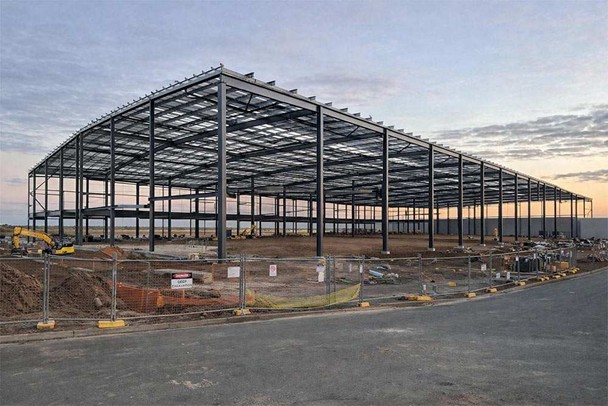
Steel procurement delays are one of the most common and costly causes of programme overruns on Australian construction projects. Whether it is late documentation, supplier bottlenecks, or scope changes after shop drawings have begun, time lost in the procurement phase is rarely recovered on site. At SteelRise Australia, we work with builders, developers, and project managers across the country who face exactly these challenges. The good news is that most procurement delays are preventable. This article outlines eleven practical, proven strategies to compress your steel procurement timeline without compromising quality, compliance, or safety.
Table of Contents
ToggleKey Takeaways
- Most steel procurement delays originate in incomplete or late design documentation, not fabrication.
- Early contractor involvement gives fabricators time to plan, reducing on-site surprises.
- BIM-coordinated models reduce shop drawing review cycles and material quantity errors.
- Standardising connection details and section sizes across a project can cut fabrication time significantly.
- Building realistic lead times into the programme from the outset is the single most effective protection against delay.
Why Steel Procurement Takes Longer Than It Should
Construction programmes regularly underestimate the time steel procurement actually requires. A structural steel fabricator in Australia typically needs between eight and sixteen weeks from receipt of approved shop drawings to first delivery on site. For complex or large-scale projects, that window can extend to twenty weeks or more.
This is not simply a fabrication speed issue. Most of the time lost happens before the fabricator even starts cutting steel. Design revisions, incomplete connection details, slow shop drawing approvals, and supplier capacity constraints all eat into the available window. According to Access Construction’s analysis of Australian construction challenges, supply chain disruptions remain one of the primary drivers of project delays and budget overruns in the sector. Understanding where time is lost is the first step to recovering it.
1. Start Procurement Planning at Design Development Stage
Waiting until construction documentation is complete before engaging a fabricator is one of the most common mistakes on steel projects. By the time drawings are issued, the programme has already absorbed weeks of unnecessary delay.
Engage your fabricator at design development stage. This allows them to review the structural scheme, flag any constructability or fabrication concerns, provide preliminary material schedules, and begin pre-qualifying steel suppliers before final documentation is issued. The earlier you bring them in, the more time you recover at the back end.
- Share preliminary structural drawings as soon as connection layouts are established.
- Ask the fabricator for a preliminary programme showing expected lead times based on current market conditions.
- Use this early engagement to identify any long-lead sections or unusual profile sizes that need advance ordering.
2. Issue Complete and Coordinated Documentation
Incomplete documentation is the single biggest driver of delay in steel procurement. When a fabricator receives drawings that are missing connection details, unclear on surface treatment requirements, or inconsistent between structural and architectural information, the shop drawing process stalls immediately while clarifications are sought.
Every request for information raised during shop drawing preparation represents lost time. A coordinated issue of documentation, where structural, architectural, and services information are checked against each other before release, eliminates most of these delays before they happen. Our 3D modelling and shop drawing service is built around exactly this principle, resolving coordination issues in the model before they reach the drawing stage.
3. Use BIM to Accelerate the Shop Drawing Process
A well-coordinated BIM model transforms the shop drawing process. When the fabricator can extract accurate material quantities and geometry directly from the model, the preparation of shop drawings is faster and the review cycle is shorter because fewer errors need to be resolved.
As pre-construction BIM guidance from Interscale explains, pre-construction is the highest-impact phase for BIM because design friction is still easier and cheaper to resolve before procurement and construction commitments begin. Once tender packages are issued, design changes reach more stakeholders and carry higher cost. Investing in BIM coordination before documentation is issued is one of the most cost-effective ways to protect your procurement timeline.
- Use the structural BIM model to generate accurate material take-offs for early procurement.
- Resolve clashes between structural, architectural, and services models before shop drawings begin.
- Ensure the model is issued at a level of detail sufficient for the fabricator to work from without additional interpretation.
4. Standardise Connection Details and Section Sizes
Every unique connection detail or non-standard section size on a project adds time to fabrication. When a fabricator encounters a variety of different connection configurations, each requires its own shop drawing, approval, and jig setup.
Work with your structural engineer to standardise connection details across the project where the design allows. Limiting the range of section sizes used also reduces material procurement complexity and the risk of stock shortages for unusual profiles. Standardisation does not compromise structural performance. Done well, it actually improves quality consistency because fabricators are repeating proven setups rather than establishing new ones for each unique configuration.
5. Engage a Fabricator with Integrated Logistics Capability
Fabrication lead time is only one component of total procurement time. Transport planning, site access, crane availability, and sequencing of deliveries all affect when steel actually reaches site and gets installed.
Working with a fabricator who manages logistics in-house rather than outsourcing to a separate freight company removes a significant coordination burden from the project team and reduces the risk of delivery timing errors. At SteelRise Australia, our logistics management capability means we manage the full chain from workshop to site, providing clear delivery schedules that the project team can build their programme around with confidence.
6. Pre-qualify Your Fabricator Before Tender
Selecting a fabricator based on price alone without verifying capability is a reliable way to add time to your project. A fabricator who wins work they are not equipped to handle will not keep programme. A fabricator who is pre-qualified against clear capability criteria will.
Pre-qualification should cover fabrication capacity, current workload commitments, quality certification to AS/NZS 5131, demonstrated experience on comparable projects, and financial stability. According to Infrastructure Australia’s 2025 Market Capacity Report, the national construction pipeline stands at $242 billion over five years. With fabricator capacity under pressure across all states, understanding your preferred supplier’s available capacity before committing to programme dates is more important than ever.
7. Identify and Order Long-Lead Items Early
Not all steel sections are immediately available from stock. Heavy sections, unusual profiles, or high-grade steel required for specific structural applications can carry lead times of four to twelve weeks from the mill or distributor, independent of fabrication time.
Ask your fabricator to identify long-lead items as soon as preliminary documentation is available. These sections can often be ordered and held in the fabrication yard before shop drawings are finalised for the rest of the structure. This simple step alone can remove four to eight weeks from the critical path on projects where long-lead sections drive the programme.
- Review the structural schedule with the fabricator to flag sections larger than 310UC or 610UB as priority items.
- Confirm mill and distributor availability before committing to programme dates.
- Consider holding stock agreements with key distributors on major projects where procurement risk is high.
8. Compress the Shop Drawing Approval Cycle
Shop drawing approval is often the longest single step in the procurement process after fabrication itself. A single review cycle that takes three weeks when it should take one week can cost the project a month of programme on a multi-package project.
Establish clear shop drawing submission and approval protocols at project commencement. Set contractual timeframes for review and response. Assign a dedicated reviewer on the engineer’s side who is familiar with the project. Agree on a submission format that the engineer can review efficiently. And make sure the site survey and set-out process is completed and confirmed before shop drawings are submitted, so dimensional queries do not arise mid-review.
9. Reduce Reliance on a Single Supplier
Single-source dependency is a procurement risk that frequently becomes a programme problem. If your sole supplier experiences a capacity constraint, a staff absence, or an equipment breakdown, your project has no fallback.
Maintaining relationships with multiple pre-qualified fabricators and steel distributors provides flexibility when it is needed. As supply chain specialists at Matrak have noted, sourcing locally wherever possible also reduces transport costs and minimises exposure to global supply chain disruptions. For Australian projects, this means understanding the fabrication capacity available in your region and building relationships with suppliers who can support your typical project pipeline, not just the current job.
10. Maintain Open Line Communication Throughout Procurement
Procurement delays rarely announce themselves early. They accumulate quietly through small communication gaps, unanswered queries, and assumptions that turn out to be wrong. By the time the delay is visible on the programme, it is already too late to recover without cost.
Establish a consistent communication rhythm with your fabricator from day one. Weekly procurement status updates, a shared document register, and a named contact on both sides who owns open items are practical steps that keep potential delays visible early enough to resolve them.
This is not about adding administrative burden. It is about ensuring that the people who can fix a problem are made aware of it before it becomes a programme event. Simple communication discipline is one of the highest-return investments available in any procurement process.
11. Build Realistic Lead Times Into Your Programme From Day One
This is the most straightforward of all eleven strategies and the most consistently overlooked. Programmes that allocate insufficient time for steel procurement do not get delivered on time. The steel does not arrive faster because the programme demands it.
Build your programme around realistic fabrication and logistics lead times from the moment the project schedule is first drafted. Factor in the shop drawing approval cycle, long-lead material procurement, surface treatment curing time, and transport. Do not compress these durations based on optimism. As the White and Case analysis of Australian construction procurement makes clear, project delays and cost overruns are common in an environment where infrastructure demand is at record levels and supply chain pressures are real. A programme built on accurate assumptions is the foundation of every other strategy on this list.
Putting It All Together
Cutting steel procurement time in half is not a single intervention. It is the cumulative result of doing multiple things well, starting early, issuing complete documentation, coordinating design before it reaches the fabricator, maintaining open communication, and building a programme that reflects reality.
Each of the eleven strategies above addresses a specific point where time is commonly lost. Apply three or four of them on your next project and the difference will be measurable. Apply all eleven consistently and procurement will rarely be on your critical path.
At SteelRise Australia, our end-to-end service is built to support efficient procurement from the earliest design stage through to final installation and certification. If you want to know more about how we can help compress timelines on your next project, we would love to hear from you. Get in touch with the SteelRise Australia team today and let us help you build smarter and faster.
FAQs
What causes the most delays in steel procurement for construction projects in Australia?
The most common causes of steel procurement delays in Australian construction include late or incomplete design documentation being issued to the fabricator, scope changes after the shop drawing process has begun, poor coordination between the structural engineer and the fabricator, single-source supplier dependency, and insufficient lead time allowance in the project programme. Late finalisation of connection details and surface treatment specifications are also frequent culprits. Addressing these issues at the planning stage, before procurement begins, removes most of the avoidable delay from the process.
How does BIM reduce steel procurement lead times?
BIM reduces steel procurement lead times by allowing the fabricator to extract accurate material quantities and prepare shop drawings directly from the coordinated model, rather than interpreting multiple sets of two-dimensional drawings. When the structural model is clash-free and fully coordinated before it is issued for fabrication, the shop drawing review cycle shortens significantly because engineers spend less time identifying and correcting errors. BIM also supports earlier procurement by providing reliable material schedules at an earlier design stage, allowing long-lead steel sections to be ordered before final documentation is complete.
What is early contractor involvement and why does it matter for steel procurement?
Early contractor involvement, often referred to as ECI, means bringing the structural steel fabricator into the project before the design is fully complete. This gives the fabricator the opportunity to provide input on connection design, material specification, fabrication sequencing, and logistics planning while changes are still easy and inexpensive to make. ECI is particularly valuable for large or complex projects where procurement lead times are long, because it allows the fabricator to begin preparing shop drawings and ordering long-lead materials before final documentation is issued. Projects that use ECI consistently report shorter overall delivery timelines and fewer variations during construction.
How much notice does a structural steel fabricator typically need to begin fabrication?
Lead times vary depending on project scale, complexity, and market conditions, but as a general guide, structural steel fabricators in Australia typically require between eight and sixteen weeks from receipt of approved shop drawings to delivery of fabricated sections to site. For larger or more complex projects, lead times of twenty or more weeks are not uncommon, particularly for heavily fabricated components with complex connection details or specialist surface treatment requirements. Projects that allow insufficient lead time by issuing documentation late inevitably face programme delays. Building realistic fabrication lead times into the project schedule from the earliest planning stages is one of the most effective ways to avoid on-site delays.
Is it better to use one steel supplier or multiple suppliers on a project?
For most projects, working with a single, experienced fabricator who manages the full scope of structural steel supply and installation provides the best outcome. A single point of responsibility simplifies coordination, reduces the risk of interface issues between packages, and gives the project team a clear escalation path when issues arise. However, for very large or geographically dispersed projects, splitting scope between fabricators in different regions can reduce logistics costs and shorten lead times for specific packages. The key is that supplier selection should be deliberate and based on demonstrated capability, not default or price alone. Pre-qualifying fabricators before going to tender is a strong practice that reduces procurement risk.
What information does a fabricator need to provide an accurate and fast quote?
To provide an accurate and timely quotation, a structural steel fabricator needs a coordinated set of structural drawings at a sufficient level of detail, a specification covering material grade, surface treatment, and quality standard requirements such as AS/NZS 5131, connection design information or confirmation that connection design is included in scope, a programme showing the required delivery and installation dates, and an indication of the project location and site access conditions. The more complete and consistent the documentation provided at tender stage, the faster and more accurate the response will be. Incomplete or contradictory tender packages slow the quoting process and introduce risk that often shows up later as variations.

SteelRise Australia delivers high-quality structural steel solutions built for strength, safety, and long-lasting performance.
Quick Links
Our Company
- Office Hours: 8am- 5pm
- info@steelriseaus.com
- 1300 901 701
-
Head Office:
1/16 Bernera Road, Prestons NSW 2170